Advertisement

Advertisement
Advertisement
Advertisement
Advertisement
Advertisement
Advertisement
HISTORY
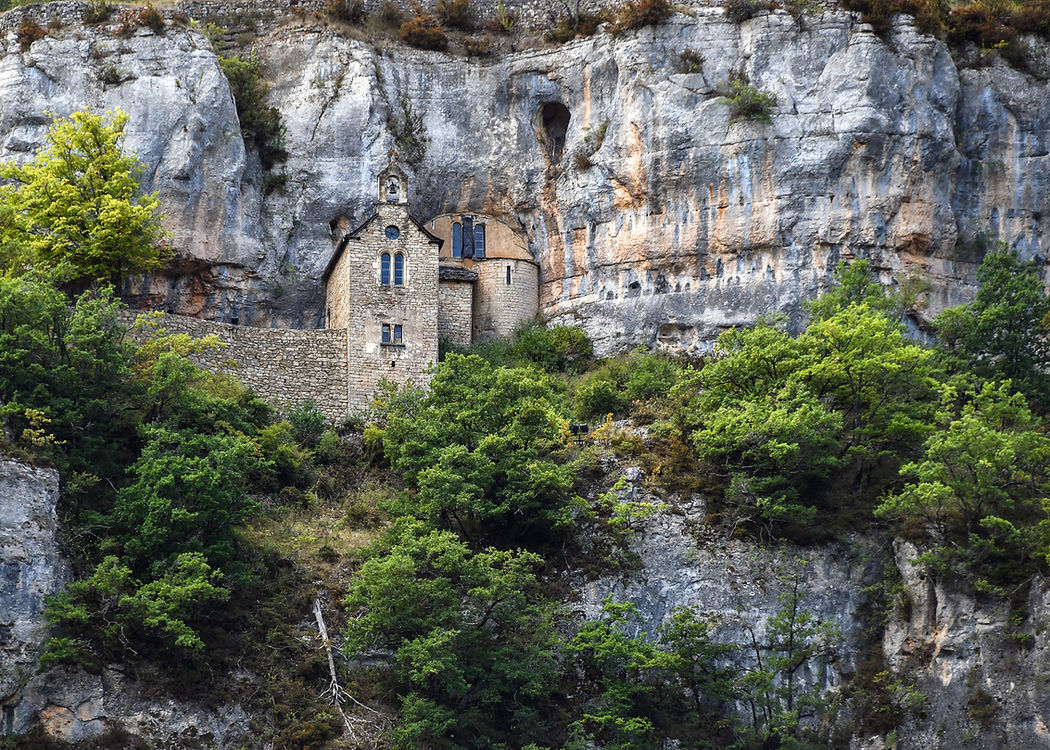

Set against beautiful islands and crystal-clear waters, the Ancient Greeks enjoyed a plenitude of stunning locations. They experienced this richness both in their life and travel, but also to envisage their Orphic mythology. In fact, mythology was so attached to locations in many instances that these sacred and beautiful places became concretely aligned with certain mythological narratives. This phenomenon has been recorded and transcended down to the modern era. Therefore, we can today learn of the precise locations mythological narratives talk about and, indeed, trace them in our own travelling adventures. Just as the Ancient Greeks walked and sailed across these islands over 2,000 years ago, today I will set forth a pathway, completely in accordance with archaeological evidence, that follows the Ancient Greek’s mythology wherever it takes us.

Mount Olympus
“They say that Mount Olympus is the everlasting home, immutable, of the immortal gods. Gales cannot shake it, nor rainstorms drench it, and no snow clouds come near; but, rather, the high air opens out, serene and cloudless, bathed in the purest light. Here every day for all eternity the blessed gods lead lives of happiness.” (Homer, Odyssey, 6.41f.)
Little is more famous than the legend of Mount Olympus in Greek mythology. This entity was the official seat of power of the gods. As opposed to the Titans, the gods at Mount Olympus controlled the earth and the skies. The distinction is apparent in the writings of Hesiod. He wrote:
“In the beginning came Chaos; next full-bosomed Gaia [Earth], an ever-safe foundation for all the deathless gods, who live on snowy Mount Olympus; and misty Tartarus in the bowels of the broad-pathed earth; and Eros [Desire], the most beautiful of all the deathless gods, who loosens limbs, seducing even the most clever minds and spirits of both gods and men.”
The Olympian gods developed out of the pre-existing Titans. In accordance with the Orphic creation story involving Chaos, the Titans emerged first. It was said that Gaia (Earth) was impregnated by Ouranus (Sky) and gave birth to a succession of primal beings, which were called the Titans. She mothered further primal beings including the Cyclopes, the Giants and Pontus (Sea). It was these Titans that became parents of many of the Olympian gods.
It is important to underline that to the average Ancient Greek citizen, the Olympian deities were the most important. This is evident from the writings of the 5th Century lyric poet, Bacchylides. He wrote:
“Lightning-fast on tawny wings, the eagle, confident in its immeasurable strength, cleaves the vast unfathomable sky – the messenger of Zeus, the thunder-god, whose rule is wide. And all the little birds, shrill-chattering, scatter in terror. The high peaked mountains cannot check him nor the pounding storm-waves of the tireless sea, but on outstretched wings he soars across the vastness of the earth, his feathers gently ruffled in the western breeze. And all men see him.”
The most important gods were regarded as residing on Mount Olympus. But where was this legendary mountain? During most of the time in antiquity it was a mountain in northeast Greece. There is an important account in the Iliad, where Homer describes Hera harnessing her chariot and driving with Athene to find Zeus – a journey in which they ostensibly travel to an actual mountain.
Precisely, the settlement of Dion is attributed as being the closest point to Mount Olympus. It is, in fact, positioned on the slopes of what is though as being Mount Olympus. Dion is today found in northeast Greece within the Pieria regional unit. In ancient times, it would have been part of the realm of Macedonia.
There is an ancient connection. One of the homes of the Muses appeared on the banks of a mountain in Pieria, which was near Dion. Crucially, Hesiod connects the Muses with Mount Olympus in his poem Theogony. He wrote:
“Delighting the great spirit of their father Zeus on Mount Olympus, singing in harmony of things that are and things that shall be and things that came before. Their sweet voice pours untiring from their lips, and the house of father Zeus the thunderer smiles, filled with the Muses’ voice, as fragrant as a lily, and the snowy peaks of Mount Olympus echo back, and the palaces of the immortals.”
Taking ourselves to Dion and the peaks of Mount Olympus, what becomes first apparent is that very few contemporary Greeks themselves made the journey or sought to find the precise location of their stories. There was a widespread and common taboo regarding seeking the almighty mountaintop. It was rather a location where victorious statesmen would proclaim lavish victory parades.
In 334 BC, at a time just before his invasion of Persia, Phillip’s son, Alexander, hosted a lavish festival with games and sacrifices at Dion. However, in 220 BC, many years later, Aetolian Greeks who were allied to the Roman Empire ransacked and looted the settlement. It would soon be rebuilt by King Philip V, yet he was a king who was at the mercy of the Roman Empire. Philip V marched from Dion southwards to Cynoscephalae, where he was defeated in battle at the hands of the Romans in 197 BC. The twelve Olympian deities became syncretised with Roman gods, developing a brand of Greek religion and mythology that had been renamed and only subtly altered.
From 31 BC onwards, Dion became a Roman colony. With a favourable geography, it even became an important and thriving town. Yet it would face a sharp downturn as Rome became a Christian Empire. Having been the seat of a bishop in 346 AD, the Christian emperor Theodosius’ decree in 393 AD that banned pagan religion struck the town with a heavy blow. Where else could a place have been such a symbol of paganism than the home of the gods themselves. Three years after Theodosius’ decree, Dion was sacked by Alaric the Goth. The town then faced earthquakes and floods, battering through the dwindling streets, before it was eventually abandoned.
The remains of Dion were discovered by the Englishman William Leake in 1806. However, it would not be until many years later that archaeological excavations were carried out. In 1928, the first excavations began.
Today, for those wishing to travel to Dion, the settlement is situated just off the E75 motorway south of Katerini in what is northeast Greece. There is an archaeological park close to the modern village and an Archaeological Museum that houses important artefacts such as a statue of Zeus Hypsistos.

Poseidon
Away from the Olympian gods, who ruled over the sky and the earth, the Ancient Greeks realised that there must be a god who reigns over the seas. This deity was established and labelled by the Ancient Greeks as “Poseidon”. We can ascertain even from the early writings of Homer how important Poseidon was to his contemporaries. The poet described the following:
“With the great god Poseidon I start my song, who shakes both the earth and the barren sea, the sea-god, who rules Helicon and the broad expanse of Aegae. The gods have given you a double honour, great Earth-shaker: to tame horses and save ships. Greetings, Poseidon, dark-haired Earth-keeper! Come with kindness, Blessed One, and save our sailors!” (Homeric Hymn to Poseidon)
Poseidon was said to have received the realm of the sea after the division of spoils following the age of Titans. Iconographically, he was famous for his trident – a three-pronged spear that some Mediterranean fishermen still use today. There exists also, a direct understanding over where Poseidon was said to reside. Traditionally, his palace is found underwater, yet it is understood that such a place lies north of Sunium, between the mainland and the north-west Euboean town of Aegae, where, in ancient times, there was a temple dedicated to Poseidon himself. It is a distinctly a palace that Poseidon was said to reside in. Homer described the abode in the following way:
“Gold, gleaming, everlasting. Here Poseidon came and harnessed to his chariot his two swift bronze-hooved horses with long golden manes. Dressed all in gold, he took a golden whip, fine-crafted, in his hand and stepped into the chariot and left to drive across the sea-swell. From far and wide the creatures of the sea came from their lairs to frolic round the king they knew so well. In joy the sea parted as he went. So the horses sped lightly on their way, and the bronze axle was unwetted.”
There are instances in mythology where Sunium appears. In some accounts King Aegeus sat above Sunium’s cliff and watched for Theseus’ ship to return from Knossos. In the narrative of the event that happened, King Aegeus was expecting to see a white sail – an agreed emblem that his son had completed his quest to kill the Minotaur. However, a forgetful Theseus left a black sail above the ship in error. Thereupon King Aegeus was so grief-stricken that he threw himself into the sea. From that point, the sea was proclaimed and given the name of the Aegean. This location is important because Strabo recounts that that there was a temple to Poseidon in the Euboean town of Aegea that is close to Sunium. Strabo maintained that the Aegean Sea was named after this temple. Sunium is a place distinctly aligned to the Aegean Sea and with this connection also Poseidon as its figurehead.
Finding itself at a strategic enclave, positioned at the southernmost tip of Attica, Sunium would become a useful strategic base for mere mortals. Occupied by the Athenians, it posed as both a strategic and symbolic heathen that is mentioned in ancient texts. Herodotus reported that by the initiation of the 5th Century (a point when a temple was under construction on the headland) there was a ceremony every four years in which a sacred ship traversed round the coast from Athens to Sunium. Uniquely, there is an epigraphic account that details the celebrations of the ceremony (490 BC). The source recounted, “[the islanders of Aegina had] lain in wait for the sacred ship and seized it with many of the leading men of Athens on board, whom they took and bound in chains.” Shortly afterwards the Athenians took vengeance by allowing Aeginetan exiles to settle on Sunium, who could then conduct pirate raids against their former islanders.
Many years later, Sunium was facing the same plight as all of Greece. This was the deathly problem of the Persian conquests. In 480 BC, the unfinished temple across the headland was burned on the orders of the Persian leader, Xerxes. Yet only weeks later, the Greek fleet defeated Persia’s navy at the Battle of Salamis – something that would have an impact on Sunium. In 444 BC, the Athenian statesman, Pericles, was continuing with his programme to restore Attica’s destroyed sanctuaries and, as such, this did not exclude Sunium.
Building projects were underway. Four years later the Temple of Poseidon was completed. Its location of Sunium, however, would continue to experience mixed fortunes in later periods past the Persian Wars. In 412 BC, during the Peloponnesian War, Sunium naturally came under the realm of Athens. As such, the promontory was fortified.
It even continued to act as a military base throughout the Hellenistic period. Naval bases were constructed, in particular those housing military ships. Sunium’s long heritage, coupled with its strategic position, ensured the location was important concerning individual Grecian wars. However, during the Roman occupation, the location declined in importance. The temple of Athene was dismantled in the 1st Century AD and re-erected in the Athenian Agora.
The 2nd Century writer, Pausanias, provides a decadent and explorative description the ancient location. He wrote in his “Description of Greece”, “Cape Sunium is on the mainland of Greece, jutting out from Attica towards the Aegean and the Cyclades. When you have sailed round the promontory you see a harbour and – on top of the promontory – the Temple of Athene of Sunium.” (Pausanias was mistaken and in fact he refers to the Temple of Poseidon).
It would take the abolishment of paganism under the Byzantine emperor Arcadius in the later 4th Century AD that ensured the Temple of Poseidon was finally abandoned. Facing different times and different religions, it became a haunt of pirates and 18th Century sailors. Lord Byron described the location upon a visit in 1810 as a place of “five and twenty Mainnotes (pirates)… in the caves at the foot of the cliff with some Greek boatmen their prisoners”. Byron even eulogized the site in his poem “Don Juan”.
Today, Sunium is a short trip away from Athens. How fitting that for both the ancients and modern travellers, it is an outcrop for any culture-seeking pilgrims in Athens. There is a carpark close to the site and steps that lead up past the fortification walls towards the eventual and famous Temple of Poseidon.

The Eleusinian Mysteries
Something that was very important to Greek life was the harvest. Each year, in either July or August, most Greeks in suitable locations would harvest their crops. Yet loathed not to assign such a phenomenon with a dutiful god, the Greeks concocted and diffused many mythological tales that related to the harvest. Most prominent of these were the myths surrounding the gods Demeter and Persephone.
The “Homeric Hymn to Demeter” describes the gods Persephone and Demeter in connection with their traditional home that was called Eleusis. Homer wrote, “And at Eleusis, the life-bringing bosom of the earth… soon in the springtime wheat fields would rustle with long ears of corn and the fertile furrows would be thick with wheat-ears to be bound tight-close in sheaves.”
Let us, therefore, examine the Eleusinian Mysteries that put Demeter and Persephone in context and provide information about the nature of this town, Eleusis. Mysteries or “initiation rites” were forbidden disclosure by the initiate on pain of death and thus, as consequence, the practices remain highly concealed even today. However, assessments today have revealed that there were two stages of initiation into the Eleusinian Mysteries. One was held during the “Feast of Flowers”, which was held between February and March. This was originally held at Eleusis yet was transferred to Athens from the 5th Century BC onwards. The focus is on Demeter, who was said to have inaugurated the rites in an attempt to purify Heracles after he had tainted himself with the blood of massacring the Centaurs.
When the rites took place, neophytes each sacrificed a piglet to Demeter and Persephone before ritually cleansing themselves in the River Ilissus. There are subsequent rituals that follow this, which involve a mixture of hymns, dances and instruction. In essence, it is a form of precursor to the Greater Mysteries at Eleusis, which would take place eighteen months later to the initiate.
Once arriving at The Greater Mysteries, the initiate would find that the process takes place over nine days in September. There was a sacred truce involved that allowed for the safe passage of pilgrims to Eleusis. There the Mysteries began and were rich with the purification of sins.
Precisely, priests and soldiers carried objects from Eleusis to Athens, purified themselves in Athens, before travelling adorned in crowns of myrtle leaves towards the sacred town of Eleusis the following day. Once in Eleusis, having fasted, sacrificed and purified themselves, they entered the Telesterion “Hall Of Mysteries”, which was a huge building with columns. Inside, much of the affairs are still a mystery to us, but it is likely that a number of processes were carried out. The neophytes first drank “kykeon”, which was a cocktail of fermented barley and pennyroyal, in an attempt, it is presumed, to enhance suggestibility and hallucinations. Following this, the circus was about to unfold. The room was lit by torches and actors, gowned in lavish costumes, frolicked through the quarters. In fact, it was a sacred drama, which probably was based on the events in the Homeric Hymn to Demeter, and equally a drama in which the initiates themselves were involved in.
The exact nature of the drama is thought to have begun with a re-enactment of the search for Persephone and involved a gong that reverberated each time Persephone was mentioned by name. The drama ended with the goddess, Persephone’s revelation in full glory. This is enacted when the sanctum’s doors within the temple miraculously open up, revealing Persephone bathed in blazing light.
The later Greek writer Plutarch provides a literary description of what it would have been like. He wrote, “Initiates into the Mysteries crowd together at the start in a pandemonium of jostling and shouting; but when the sacred ritual is being performed and the time comes for the revelation, they are at once rapt in silent attention. The same is true of philosophy. In the early stages, you will see a great multitude, much talk, much confidence, as some people roughly and aggressively compete for the good reputation it accords; but whoever has reached his goal and seen a great light – as if the sanctum had been opened – takes on another demeanour entirely, one of silence and awe.”
Further tropes involved in the Eleusinian Mysteries equally relate to Persephone and Demeter. The most sacred revelation is thought to have been a casket that was filled with bundles of stems of corn from beneath the ground, which was raised upwards. They were considered to contain the seeds of new life.
So who, precisely, were Demeter and Persephone? A marble relief from Eleusis, dated from around 440 BC, depicts the goddesses of the Eleusinian Mysteries, Demeter and Persephone, who flank the young prince, Triptolemus, in the centre. As Eleusis is centred around new crops of grain, Demeter and Persephone related crucially to the harvest. Assessing Demeter, first, the very nature of her name immediately connotes the harvest. “Meter” meant “mother” and “de” is thought to either be a connection to the Cretan word for barley (dea) or “de” – the Doric word for “earth”. In mythological tales, Demeter was imagined to have ruled over fertile plough-land – these were lands that Zeus impregnated with his rain in order to produce crops or flowers.
However, at this point Persephone enters the tale. Zeus impregnated Demeter and produced a child, who was called Persephone. Unfortunately Persephone is later abducted by Hades and through trickery involving a narcissus, Persephone slips through the earth and down into the Underworld. There Hades hopes to marry her. Sorrowful at her daughters’ disappearance, Demeter wandered the earth searching for her, neither eating nor drinking, for nine long days and nights.
She even decided to leave Mount Olympus. Despairing and moribund, she at first visited Eleusis, concealing her identity. At last, after a couple of weeks’ various intrigues, Demeter reveals her true self and instructs the people of Eleusis to build her a temple. Thereupon, the “Homeric Hymn” relates the remaining further details regarding Demeter, Persephone and Zeus.
These emblematic liturgies elucidate the connection between Demeter and Persephone. They continued to describe Demeter’s sadness at having Persephone taken away from her. The Hymn stated:
“Growing weak with yearning for her deep-bosomed daughter. And for mankind she brought a cruel distressing year across the all-sustaining earth: the soil refused to send forth grain, for richly garlanded Demeter kept it concealed. In vain the oxen pulled the curved ploughs in the field; in vain was the white barley sown. She would have exterminated all the peoples of the earth with painful famine and robbed all the Olympian gods of the honour of man’s sacrificial offerings, had not Zeus noticed and acknowledged it in his heart.”
It was thereupon said that Zeus sought to persuade Hades to release Persephone from the Underworld. But what follows is a ruse regarding a pomegranate seed. The following account elaborates on this feature further. The Homeric Hymn accounts the inquests of Demeter in the following manner:
“My child, when you were beneath the ground, did you eat anything?... If you did not, then, now that you’ve returned from vile Hades, you can stay with me and your father, Zeus, the storm-gatherer, whom all the immortals honour. But if you did eat, you must return into the depths of earth to live there for a third part of each year, and with me and the other gods for two thirds. Whenever the earth blossoms with all species of sweet-scented flowers, you shall rise up once more from gloomy darkness, a miracle for gods and mortal men.”
This description refers to one of the most known facets of mythology surrounding the harvest. Persephone was said to have a cyclical exit and return to the heavens, which (in effect) was taken as a mythological explanation for the decline of crops and then a rebirth in the spring across the Grecian landscape. What was an indispensable urgency to the Greeks was indeed the harvest. It is fitting that there would be such elaborate mythological tales attached to the sector.
Today, Eleusis has been completely transformed and is now an industrial centre in Greece. Albeit surrounded by modern factories, there are many preserved archaeological ruins. What is special about Eleusis is the notable length of its history. Surveys have suggested that the site of Eleusis dates back to at least the 15th century BC. The Homeric Hymn, which includes lengthy descriptions of Demeter and Persephone and Eleusis, was first written down in the 7th century. What becomes apparent is that from an early age the town served as a tourist spot for anyone interested in the Eleusinian Mysteries.
In the middle of the 6th century BC, Eleusis was annexed by Athens. At this point, the Athenian statesman, Peisistratus, encouraged travellers to visit Eleusis from across the entire Greek world. However, the sanctuaries of Eleusis were burned by the Persians in 480 BC. This catastrophe did not last for too long, since the Persian navy was defeated at the Bay of Salamis – a feature which brought the control of Athenian to return once again.
The Bay of Salamis is, in fact, directly opposite Eleusis. Herodotus recorded this detail concisely in his book “Histories”. Referring to the day on which the battle took place, he wrote, “a cloud of dust [was seen], like a cloud raised by 30,000 marching men, coming from Eleusis… and the sound of voices like the hymn to Iacchus, sung at the Mysteries… The dust-cloud rose into the sky and drifted across to Salamis, where the Greek fleet was stationed.”
With the sanctuaries built once again, generations of worshippers continued to venture to the sacred location. The sanctuaries existed through to the Roman period. Cicero proclaimed that the Eleusinian Mysteries was the most superior of all “Athenian” institutions, writing that “from them we have gained the ability not only to live contentedly but to die with greater hope.” Later, Hadrian developed the location further, with enhanced temples and greater space. Marcus Aurelius, during his time, immediately restored the sanctuaries, after Costoboc tribesmen sacked and destroyed large parts of the agora in 170 AD. As with most pagan entities, the Eleusinian Mysteries were banned by the Christian Roman emperor Theodosius in 392 AD. This had the effect of ceasing most of the religious activity. The ruins were later ransacked, plundered and left to decay.
Providing 21st century tourists with information today, the remnants of the town are open to the public. There are statues of Demeter, marble reliefs and excavations of the former temples. There is also a museum, offering further information.

leto, artemis & Apollo
Apollo was the Greek god of light, healing, prophecy, music, poetry and archery. His twin-sister, Artemis, was the goddess of hunting. Their mother was Leto who was impregnated by Zeus. But what also tied them together was the island of Delos – a sacred space for all three of the deities. Where Delos is central to their mythological tales is in the hiding place it offered Leto, who sought refuge from Zeus and his wife, Hera.
The “Homeric Hymn to Delian Apollo” recounts the hardships of Leto exactly. The hymn informed,
“Queen Leto came to Delos, and, addressing winged words, she asked: ‘Delos, might you wish to be the seat of my son, Phoebus Apollo, and house him in a rich temple? Surely you can see that no one else would want you! You’ll never be blessed with rich herds of cattle or flocks of sheep or goats. You’ll never produce lush grapes or harvests of abundant crops. But if you have a temple to Apollo, who shoots from afar, all men will flock here with their offerings, and the heady scent of fatty sacrifice will coil into the air for ever, and you will feed all those who live here from the hands of others, since your own soil is infertile.’
So Leto spoke, and the Delos rejoiced and said in reply. ‘Leto, most honoured daughter of great Coeus, I shall gladly welcome your son, the lord who shoots from afar. For now my name brings no pleasure to mankind, but then I would be honoured beyond measure.’”
Delos is the place where Leto gave birth to Artemis and Apollo. It is that act that endowed the location, esteeming it as one of the most sacred sites to Greeks in the Classical age. The village became one of the top tourist destinations for Ancient Greeks, most commonly for those making the journey from Athens.
This sanctity was observed from a very early age. In the late 7th century BC, the Ionian islanders of Naxos dedicated a series of between nine and twelve marble lions. These were positioned on a terrace overlooking the sacred lake.
At the start of the 6th century BC, the Athenian statesman, Peisistratus, made wholesale changes to the town. In an attempt to bolster Athenian command over Ionian Greeks, he constructed renovations of the area surrounding the sacred lake, removing, for instance a collection of vineyards. He also began building a temple to Apollo. This was an enormous temple which faced the Sacred Harbour and housed within the inner sanctuary a massive statue of Apollo.
It is this time, during the age of Classical Greece, that Delos particularly flourished. Facing the Persian invasion in 490 BC, the Athenian statesman, Hippias (Peisistratus’ son), was known to make lavish sacrifices at Delos to beseech Apollo’s aid. In fact, it was an aid that was famously a traitorous pursuit, since Hippias had defected to the Persians. However, what spurned after the Persian Wars was Delos’ crucial role as the site of the assembly and treasury of the Greek League, known as the Delian League.
This was an enormous responsibility, and the accolade resulted in further building projects taking place across the town. Another colonnaded temple to Apollo was set in motion. Yet accompanying the favouritism of Delos came friction between the island and their commanders. By the time the second temple to Apollo was finished it was 454 BC and the League’s headquarters had been transferred to Athens.
Come the Roman era and Delos was thought of as a bustling free port. It had equally continued to grow in size and was now a substantive settlement. It began, as such, to become more cosmopolitan. Temples to Isis and Ba’al were built, along with one of the oldest surviving Jewish synagogues. Yet the town’s biggest problem was the lack of agricultural land. This was a facet that ensured that by the turn of the 1st millennia, the town declined and was abandoned.
Travellers today can either access Delos via a ferry from nearby Mykonos (30 minutes) or disembarking from a cruise ship, which is reasonably popular. Arriving at Delos, visitors can observe the remnants of multiple temples to Apollo, the temple to Leto and the dried-out sacred lake. There is also a museum for your enjoyment and curiosity.

Apollo's Oracle At delphi
Not only having been born in Delos, in other aspects Apollo was a very central deity within Greek mythology. Apollo was so central in fact that he was attributed with a sacred oracle. This oracle was located in Delphi, west of Athens in central Greece.
The “Homeric Hymn to Pythian Apollo” (281-93) recounts Apollo’s ability exactly. It stated:
“Swift over mountain peaks Apollo swooped – to Delphi, poised on an outcrop facing west beneath the snows of Mount Parnassus. A cliff towers over it, while far below unfolds a rocky valley bristling with trees. Here the Lord, Phoebus Apollo, ordained his dazzling temple, saying: ‘This is the place that I have chosen for my radiant shine, an oracle for all mankind, who for all time will bring to me here perfect sacrifices – all those from the lush Peloponnese, and all who live in Europe and on wave-lapped islands, when they come to question me. And in my sumptuous temple I will give to all of them my guidance, and it shall not fail.’”
While assessing the geography of the location, it becomes clearer why Delphi was chosen logistically. At daybreak, the sun’s rays flood across the crags of Mount Parnassus. It is an effect that it imbues the white cliffs with dazzling light. The rocks were, in fact, known as the “Shining Rocks”. The effect was even heightened against the temples, creating a golden radiance. It was so awe-inspiring that the sanctuary appeared to float above the stillness of the valleys below.
Enhancing these effects yet further, eagles were commonly sighted. They flew above the banks of grassland and herbal plants below. Eagles were particularly important because they were considered as the birds of Zeus, and with that all the god’s potency.
The story that ushers in Apollo as lord of Delphi begins very early on his lifespan. It begins with his mission to slay the Python that had persecuted his pregnant mother, Leto. Apollo managed to find the three-headed serpent in the foothills of Mount Parnassus. However, the beast has coiled around the primordial oracle of Delphi, which predated Apollo and was attributed to Gaia. It seemed impossible to overcome the serpent, yet Apollo relied upon his innate skill as the “archer god”. Therefore, before the serpent could attack, when he rather snapped his jaws and flicked its tongue, Apollo launched a barrage of arrows, slaying the great monster.
How Apollo gained his oracle is explained in another mythological tale. Zeus demanded that Apollo purify himself having slain the serpent. Once purified in a land thought to be Cretan, he returned to Delphi and set about enforcing his rule. He convinced the god Pan, who was a half goat half man, to teach him the arts of prophecy that would enable him to preside over the oracle. Having civilized and educated the local inhabitants, it was Apollo’s reign over the oracle that enabled him to invite his mother Leto and sister Artemis to visit the town and celebrate his triumph over Python.
In the later époques that touched Delphi, much of its renown was related to the various sporting and cultural festivals held at the town. The Pythian Games took place, which was held in the town’s stadium. So too did several contests for the Arts similarly accompany. The oracle, equally, had a functional process. Travellers flocked to the mountaintop in consultation. The source gave a response every 7th day during the time Apollo was in residence, which was nine months in the year. Deciphering what was asked and what was said, remaining evidence seems to suggest that it predominantly revolved around statehood – in the 6th century BC, the Lydian king, a man named Croesus, enquired whether he should invade his neighbours, who were the Persians. He was famously given an enigmatic answer, and the ensuing result was the downfall of his army. Alternatively, many plebian folk made the journey to Delphi simply to ask mundane questions, such as whether they would have children.
There were intriguing incidences during the Classical period, Hellenistic period and Roman period. At one point the oracle announced that Socrates is the wisest man alive, which, as befitting a philosopher, provoked an immediate rebuttal from himself. In the Roman period, Nero was said to have been told “beware of the age of seventy-three”, which relaxed the emperor, however before long it would be related to the age of his successor, Emperor Galba.
Petitioning, unfortunately, revolved around sacrificing animals. It was the stalwart of communicating with the divine. There was also an intermediary priest or priestess that transmitted the divine forward. However, during antiquity there was no place greater than Delphi. The town was the wonder of all Greece. Riches came in, such as the sphinxes from Naxos, gold and ivory statues of Apollo from Ionia and countless other statues of Apollo.
Yet, naturally, this feature did provoke heavy plundering in later ages. Having been ransacked by the Persians in 480 BC and the Gauls in 279 BC, by AD 12 the town was, in fact, derelict and moribund. Yet it emerged once again, this time as a tourist destination for citizens of the Roman Empire. This happened between the 1st and 3rd centuries AD. In fact, the last Pythian Games is attested to have carried on until AD 424, years after Theodosius had banned pagan worship.
For tourists today, fortunately, certain temples such as the temple of Apollo have been partially reconstructed. There are other impressive ruins such as the stadium and theatre and the Treasury of the Athenians that has been completely reconstructed. There is also a museum for further information.

Aphrodite
Rich with legends, tales and personification, Aphrodite underscored Greek notions about beauty, love and pleasure. Some the most famous mythological narratives include sexual encounters with other gods, love affairs equally with mortals and the bipartite conception of “pleasure” she dwelt over.
Once again, Homer describes the connection between Aphrodite and Paphos in the “Homeric Hymn to Aphrodite” (1-18). The text stated:
“My song shall be of Aphrodite, queenly, golden-crowned and beautiful. Hers are the strong-walled towns of sea-washed Cyprus, where the West Wind, moist and warm, once carried her in downy foam across the rolling, moaning sea. Gladly the golden-ribboned Seasons welcomed her and clothed her in a heavenly dress. On her immortal head they set a golden crown, well-wrought and beautiful; in her pierced ears they placed jewellery of gold and mountain-copper; and at her soft throat and her radiant breasts they hung gold necklaces, such as the golden-ribboned Seasons themselves wear when they go to their father’s house to dance the sensuous dances of the gods.”
Paphos had always been associated with fertility. However, by taking a look at literary texts first, Ovid provides his own in-depth account of how the land Aphrodite ruled over came to be called Paphos. Ovid described how Aphrodite entertained a love affair with the mortal Adonis. Yet the story further develops when it emerges Adonis’ grandfather was Pygmalion, king of Paphos. After an intrigue at the court of Pygmalion, where Aphrodite grants the king’s fervent desire to marry the girl depicted in a sculpture, Pygmalion and the girl eventually bear a child, which was called Paphos.
Returning to archaeological testimony, crucially there is evidence of a flat limestone hill at Palaepaphos, where it is thought a fertility goddess was worshipped. This is thought to have taken place from the early third millennium onwards. Around 1200 BC, the first temple precinct was built up and a megalithic sanctuary began. There were a pillared hall and an altar. It is this altar that is thought to have featured in the “Odyssey”, where after an encounter with Ares, Aphrodite flees to this “sweet-scented” altar, where the graces bathe her, “anointing her with that immortal oil which glistens on the deathless gods, and clothing her in a beautiful dress.”
Before long, the village would have to live through the Persian Wars. It was a time when the settlement came under siege as the two empires vied for control of the Aegean. Such a necessity would bring a heavy impact on the landscape of Paphos. Defence shelters were erected, while ancient temples were damaged by missiles.
Later, in 58 BC, Cyprus and Pathos with it, were incorporated within the Roman Empire. At one point, during the 1st century AD, the sanctuary was rebuilt after damage from an earthquake. The improvements were nonetheless on a grand scale and witnessed improvements to the Bronze Age complex along with newfound banqueting rooms and lavish mosaics. Under Roman rule, Paphos experienced a quintessential period of great prosperity. The location became a mixture of religious importance and tourism for wealthy individuals.
It continued onwards until the late 4th century AD. In 380 AD Emperor Theodosius’ ban on pagan worship caused the town’s main purpose to now be defunct. Later raids, the heaviest being at the hands of the Saracens in 653 AD, effectively eliminated the town once and for all.
Tourists today can visit the ancient ruins. Paphos has, in fact, become a UNESCO World Cultural Heritage Site. Alongside the remaining temples and mosaics, there is also a museum for further information.
Thebes
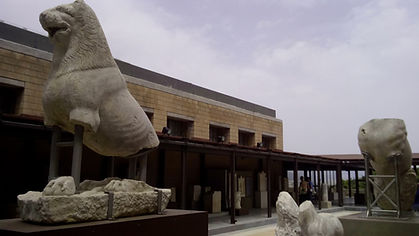
Thebes existed as an ancient city that was situated in Boeotia in Central Greece. It was therefore a close neighbour of the powerful state of Athens. It was a city that was equally connected to many deities in mythology. Tourists would come and flock and immerse themselves in decadent tales.
The most prominent deities that were connected to Thebes were Dionysus, Oedipus and Heracles. And in particular, Dionysus was the most important of the three. Sophocles described the salvation of Thebes and its patron deity in his “Antigone.” Here he described how:
“Shafts of bright sunrise, more beautiful than any which bathed seven-grated Thebes before! Gold daybreak, dawning, blazing over Dirce’s streams – you watched the Argive army turn and flee, their white shields, armour, bridles glittering!... Victory has smiled on Thebes and her war-chariots, rejoicing with us in our victory, now we have put an end to fighting, put it all behind us! Let’s visit all the temples, singing, dancing, all night long! And, as he pounds the Theban soil in his ecstatic dance, many Dionysus be our leader!” (Sophocles “Antigone”, 100-09, 147-54)
In fact it was said that here in Thebes, the god Dionysus was both conceived and born. Legend said that Zeus has disguised himself as handsome young man and impregnated the beautiful Princess Semele after Zeus had observed the maiden naked and washing in a river. Escaping the wrath of Hera, Semele was able to give birth to the eventual god of wine and drunkenness.
Aside from Dionysus, Thebes was important in a tale that had an aetiological tinge regarding the character Cadmus. It was a mythological tale that envisaged the rise of Theban nobility. Alternatively, there were mythological narratives surrounding the construction of the Theban city-walls that involved the characters Zethus and Amphion. There were also the exploits of Heracles, who was said to have been born in Thebes.
Archaeologically, however, the emergence of the modern city of Thebes has precluded great swathes of potential assessment. In fact little has been discovered and the most illusory sources is the abundance of ancient texts. Thebes is known to have been one of the oldest ancient Greek city-states. During the Bronze Age it blossomed as a vehicle for trade and tourism.
The most prosperous age came at the time of the 4th century BC – the quintessential era of Classical Greece. Having endured a hostile occupation in 382 BC under the Spartans amidst the Peloponnesian war, leading Theban statesmen, such as Pelopidas and the General Epaminondas, took great steps to enhance the city-state. However, when the conquests of Alexander came, having sided with Athens and then conquered by the Macedonians, Thebes was at one point raised to the ground after a failed revolt.
In fact, it was siding with the wrong forces that proved the eventual collapse of the entire city. When Rome annexed Greece in 146 BC, Thebes allied itself with Mithridates of Pontus. When the region was conquered by the Roma general Sulla, the town would face a hard reckoning. By the time Pausanias visited, the land was nothing but a small village.

Heracles
Heracles was a particular hero that pervaded the minds and culture of Ancient Greece. He was classified as a divine hero, who was the son of Zeus and the human, Alcmene. Alcmene nonetheless had a noble ancestry, being the granddaughter of Perseus and Andromeda (according to the “Bibliotheca”), who were both primordial heroes.
Heracles was most famous for his “Twelve Labours”. There were a series of tasks that the hero was compelled to accomplish. Precisely, it was after Heracles was forced to serve Eurystheus, King of Mycenae, as a result of guidance from Apollo, who Heracles had beseeched after seeking to atone for inadvertently killing his wife and children under the influence of Hera.
As such, Heracles began his “Twelve Labours”. It was indeed a campaign that would take place over many different places across Greece. The first six of the labours took place closer to home – in the Peloponnese. Other occasions would take Heracles further afield, such as the depths of the Black Sea and Tiryns. Statius, in the “Thebaid”, describes vividly the exploits of the demi-god. He wrote:
“Heracles himself roused ancient Tiryns to arms. The city was not without brave men nor unworthy of her great son’s fame, but fallen on harsh times, without the strength that wealth can bring. Few live in her empty fields, but they still point out the citadel, built from the sweat of the Cyclopes’ brow. Yet still Tiryns can raise a force of three hundred gallant men. Untrained for war they may be, and lacking javelin-thongs or gleaming swords, but on their heads and shoulders they drape lion skins, as befits their ancestry; and in their hands they wield a pine staff, while their quivers bristle with innumerable arrows. They sing the battle hymn of Heracles, who purged the world of monsters; and far away on wooded Oeta, the god listens to their words.” (Statius, “Thebaid”, 4.145f.)
Heracles would be envisaged and depicted in later art across the Renaissance period. He was a Greek hero, whose name and reverence transmitted across the lands of Greece entirely. Like Olympia, in which one his trials took place, he was an essential panhellenic emblem.

argos
Where many of Zeus’ children commanded regions across the Greek peninsular, Hera, in fact, had her own realm as well. Principally, the goddess was said to resided in and operated out of the northern realm of the Peloponnese that was Argos.
Herodotus recounted this attachment in a refined section of his “Histories”. He wrote:
“The people of Argos were celebrating the Festival of Hera and it was vital that the priestess be driven to the temple by a yoked team of oxen. However, the oxen had still not returned from the fields. Time was running out, so her sons, Cleobis and Biton, shouldered the yoke and pulled the wagon with their mother inside it for five miles until they reached the temple of Hera.
Their mother was delighted with their efforts. She stood in front of the statue and prayed that, since Cleobis and Biton had shown her such honour, the goddess Hera should grant them the greatest reward which a man might have. The prayer made, the people sacrificed and feasted. As for the young men, they fell asleep in the temple, and never woke again. Their lives were over. The Argives made statues of them, which they dedicated at Delphi, to show that they had been the best of men.” (Herodotus, “Histories” 1.31)
Argos, itself, followed the suit of many other Greek city-states. The location vacillated during the Peloponnesian War. As such, it fell victim to Spartan invasion and numerous atrocities committed by them. But this was not something Argos did not know beforehand. The position of Argos between Corinth and Sparta ensured Argos was often embroiled in some kind of war.
Its demure had been evident during the Persian Wars, where it had remained controversially neutral. When the Peloponnesian War did come, therefore, the city had taught itself to be particularly fickle. It continued in this way during the exploits of Thebes and Macedon – where, having fought against the Spartans at Leuctra (371 BC) and Mantinea (362 BC), within ten years the city was asking the Spartans for help against Macedon.
Greece, and Argos within it, were finally annexed by the Roman Empire in 146 BC. Eccentric trails of the Greeks were now surpassed by Roman order. The Greeks did keep hold of the Nemean Games, something that had left Nemea and became a permanent fixture at Argos in 50 BC. During the Byzantine period, Argos experienced a wealth of relative prosperity. However, the tide would turn in the Middle Ages, when the town was mercilessly raided by the Turks. These brigands both enslaved the population in 1397 AD and massacred the remaining population in 1500.
In modern times, the preexisting settlement was completely shattered in the Greek War of Independence (1821-29). The town today knows nothing of the ancient past – the concrete layout dates only back to the 1960s.

THE tROJAN wars
The iconic legends of antiquity were the events of the Trojans Wars. Expressed in Homer’s “Iliad”, they were the primordial myths surrounding ancient Greece’s origins. The texts were the first instance of Greek literature and the first of any Greek narrative form.
Some today doubt even whether these events took place at all. So far back in time, they have absconded from the physical and literary evidence that other texts possess. However, such disregard for the veracity of Troy stems from the plight of archaeological evidence – the town was rebuilt during its 4,000 years as a settlement altogether leaving an enigma.
Nonetheless, what is apparent from literature is that, during the Bronze Age, Troy was beside the sea. Sediment analysis has elucidated the matter: alluvial deposits from the River Karamenderes Cayi (probably Homer’s Scamander) have shown that the coastline has moved 6 km (4 miles) since ancient times. What is clear is that Troy was positioned in the north-western promontory of Asia Minor. The land of Troy is never described singularly by Homer, who combines the city and land as one. However, Herodotus knows the details exactly. The Trojan lands, he says, is bordered at the north by the Hellespont and the westernmost part of the Propontis. To the south, he says, there is the Gulf of Adramyttium, and at the western edge, the Aegean Sea. The western side is debated more and differs according to differing writers, yet the most concrete sign of a border is the mountain range of Ida.
As I have said, Troy boasted an extensive history as a settlement. The second phase of Troy (Troy II) lasted from roughly 2550 to 2300 BC. Here, stone-crowned ramparts circumnavigated a citadel and an inner commune of important houses. Monumental gates allowed for the only way in. There was, in fact, a lower palisade covering a total urban area of 22 acres. However, this “Troy II” was a destroyed in a fire. It was a fire that suggested strife alongside the blazes, since the inhabitants appear not to have salvaged their riches – an argument attested by the remaining hordes of gold, silver, bronze, electrum, carnelian and lapis lazuli discovered at the location.
A later rebuilding of Troy, dubbed “Troy IV”, has left enough archaeological remains to rank the scale and splendour of Troy quite highly. The citadel of Troy IV, founded around 17000 BC, has left remains that suggest its magnificent past. The citadel was enormous. There was a paved and well-drained main road that etched through the metropolis. Buildings were commonly two-stories high. There was even a bustling town outside the defensive walls – a town that roughly covered 75 acres.
Archaeological discoveries have indicated that Troy VI traded with the Greek world rather than closer Anatolian Hittites. However, in roughly 1,300 BC, this all changed. The exact cause is unknown. Such a phenomenon has been variably attributed to earthquakes or plunder.
On the other hand, whilst there are indications of strife and turmoil, even warfare, there is nothing archaeological, epigraphic or geological that confirm the historicity of the Trojan War. There is no concrete evidence that this war ever took place. Assessing the reason lies in the nature of the student’s task when mapping mythology. Epic poetry and mythology are not works of history. Through the oral tradition, stories are exaggerated and invented, so much so that a whole war such as that for Troy may never have taken place. Of course, such an elaborate tale equally negates the corrective impulse to admit finally that it never existed. There was, also, a precursory event that might have spurned the story. Around 1200 BC there was brief war between Greeks and Hittites, which resulted in treaty being signed between the two nations.
Within the mythological war, Troy’s enemies were famously Agamemnon and his brother Menelaus. Geographically, Agamemnon was ruler of Mycenae and Menelaus was ruler of Sparta. Sparta, famous throughout the Classical Period, along with Mycenae were both situated within the Peloponnese. It would therefore have taken the journey across the Aegean Sea to arrive at the beach of Troy. Such an adventure and such a war have been remembered and immortalised in the various bulks of media depicting the mythological tale of Troy.

ithaca & knossos: lands from homer's "odyssey"
The subsequent tale of Homer described the return of a Greek king to his homeland once the Trojans had been defeated and the war had come to an end. This was the legendary story of Odysseus. And Odysseus was the estranged king of Ithaca.
What is narrated in Homer’s “Odyssey” is the difficult journey Odysseus faces after the end of the Trojan War. Odysseus, in fact, is the only member of his crew that makes it back alive. Firstly, let us underscore the stringent tides between Odysseus and Ithaca. In Book 9 of the “Odyssey”, Homer wrote:
“I am Odysseus, the son of Laertes, known to all men for my cunning, and my fame has reached the skies. I come from clear-seen Ithaca. There, on the island, is a mountain, Neriton, with rustling trees, quite visible even from far-off. Nearby are many other islands, all close to each other: Dulichium and Same and forested Zacynthus. Ithaca itself is generally low-lying, the furthest out towards the sunset, while the others lie apart to the east, towards the rising sun. It is a rugged island, but a good nurse for young men.” (Homer, “Odyssey” 9.21f)
Odysseus was part of a royal dynasty that ruled over Ithaca. He had famously been reluctant to travel to Troy in the first place but had been persuaded to do so by Agamemnon. However, the text would be nothing if it were not for the bountiful lands Odysseus reached on his travels. Knossos was one such place. Homer wrote in the “Odyssey” the following:
“There is a land called Crete, midpoint in the wine-dark sea, a beautiful land and fertile, gushing with flowing water. Many people live there – too many to count – and there are ninety cities. They do not all speak the same language but a variety of tongues. There are Achaeans and big-hearted Cretans, Cydonians and Dorians and wealthy Pelasgians. Here is the great city of Knossos, where Minos ruled, who every nine years spoke with mighty Zeus.” (Homer, “Odyssey, 172-79)
As is apparent from the citation, Knossos was located on the large island of Crete and still today boasts some ancient ruins. What is less certified is the veracity of Homer’s descriptions within the “Odyssey”. Some archaeological and topographical surveys have revealed a similarity between the remains of ancient Ithaca and Homer’s own presentations. Dexia Bay (just west of Vathy Bay) is thought to correspond to the south of Ithaca, where the Phaeacians left Odysseus. Eumaeus’ hut, further, seems to reflect the Marathia Plateau above Raven’s Crag. There are no distinctive remains of a palace, but two sites pose slight offerings of what could have been a royal past. These are Alalkomenai and Platrithias, that both have Mycenaean remains.
However, Homer describes his Ithaca as the “furthest out towards the sunset” of the Ionian Islands. Conversely, the Ithaca demonstrating topographical similarities does not bear this feature. Even the ancient writer, Strabo, was confused as to what was Ithaca and what was not. He was puzzled between the common Ithaca and the other suggestion (Lefkas) which was deduced from the argument that Homer meant “closest to the mainland”. There was even a third option, called Paliki, which is now a promontory of Cephalonia, but was once an island crucially the furthest west.
With such limited evidence, the picture that arises is once again a divide between mythology and historicity. The great epics exist, but there lacks enough evidence to cement the stories as fact. The region of Ithaca was also poor in Classical times compared to the rest of Greece and fared little better throughout the Medieval Period, where it was taken by Sicilian Normans in 1185 and ravaged by Turks in 1479. Ithaca is an island in the Ionian Sea, west of the Greek mainland.